.svg)
Cardiac Ablation – Treatment for Irregular Heart Rhythms
A minimally invasive procedure to correct abnormal heart rhythms (arrhythmias) and restore a steady heartbeat safely and effectively.



.svg)


What is Cardiac Ablation?
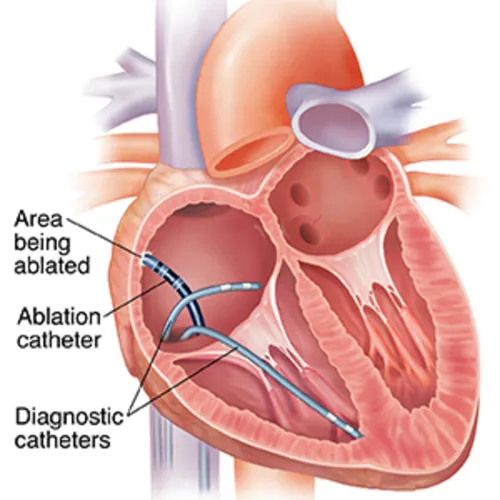
Cardiac ablation is a minimally invasive heart procedure that treats abnormal heart rhythms (arrhythmias). During the procedure, thin catheters are inserted into blood vessels and guided to the heart, where radiofrequency (heat), cryotherapy (cold), or laser energy is used to destroy small areas of abnormal tissue causing irregular electrical signals. This helps restore a normal heartbeat, relieve symptoms, and prevent serious complications like heart failure or stroke.
Symptoms


.webp)
Causes


Types of Cardiac Ablation
%20Ablation.webp)
.webp)

Diagnosis / Pre-Procedure Assessment



.png)
.svg)
Cardiac Ablation Treatment
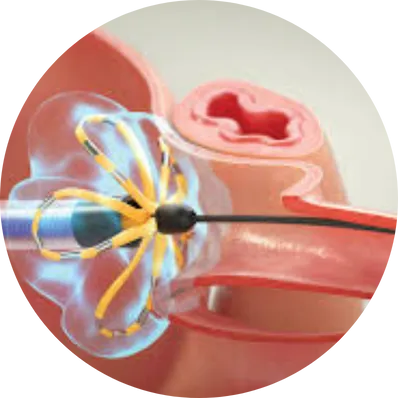
A thin catheter is inserted through a blood vessel in the groin or wrist and guided tothe heart. Once the abnormal electrical pathway is located, controlled energy isdelivered to destroy the faulty tissue causing the arrhythmia.
This method uses heat energy delivered through the catheter tip to cauterize theabnormal heart cells. It is commonly used for conditions like SVT, atrial flutter, andsome ventricular arrhythmias.
Instead of heat, extreme cold is used to freeze the abnormal area inside the heart. It isoften used around delicate structures, especially in treating atrial fibrillation, tominimize damage to surrounding tissues.
For atrial fibrillation, the doctor isolates the pulmonary veins where abnormalelectrical signals usually start. Ablation creates a barrier that prevents these signalsfrom reaching the rest of the heart, helping maintain normal rhythm.
Before delivering energy, the doctor performs detailed electrical mapping of the heartto pinpoint the exact location causing rhythm disturbances. This increases accuracyand effectiveness of the treatment.
By eliminating the abnormal electrical pathways, the procedure helps restore a stableheartbeat, reduce palpitations, prevent fainting episodes, and lower the risk of strokein some arrhythmias.
Since it is done through small punctures, the procedure has minimal pain, shorthospital stay, and quicker recovery compared to open-heart surgery. Most patients gohome the same day or next day.
Why You Should Not Delay
Untreated arrhythmias can lead to stroke, heart failure, or sudden cardiac arrest. Early treatment with ablation improves rhythm control, prevents complications, and enhances quality of life.

Why Us?
With Healic you get Trustworthy Care, Affordable Prices and Parivaar Jaisi Dekhbhal.
6 Hospitals; 4 Under Construction
Patients Served Last Year
Expert Doctors & Surgeons
Expert Care Team

Real Patient Stories
Frequently Asked Questions
Cardiac ablation is a minimally invasive procedure that treats abnormal heart rhythms by destroying tiny areas of heart tissue causing irregular electrical signals.
Healic cardiologists suggest ablation for patients with AFib, atrial flutter, SVT, or ventricular tachycardia especially when medicines don’t help or symptoms like dizziness, palpitations, or fainting persist.
Thin catheters are inserted through a vein (usually the groin) and guided to the heart using advanced imaging. Heat (radiofrequency) or cold (cryoablation) is applied to correct faulty electrical pathways.
Most patients go home the same or next day. Light activities can start within a few days, and full recovery typically takes 1–2 weeks depending on the arrhythmia treated.
Risks are low but may include bleeding at the insertion site, infection, stroke (rare), heart perforation, or recurrence of arrhythmia. Healic’s expert cardiac team ensures safe, monitored care.
Don’t worry, our expert team will guide you through diagnosis, treatment options, and recovery. Share your question and we’ll respond quickly.
Get Expert Advice
.svg)
.svg)
.svg)
.svg)