.svg)
Clear Vision with Corneal Transplant (PKP)
A full-thickness corneal transplant that replaces the damaged cornea with a healthy donor cornea restoring sight and improving quality of life.




.svg)

What is Penetrating Keratoplasty (PKP)?
Penetrating keratoplasty (PKP) is a full-thickness corneal transplant surgery, where the entire diseased or scarred cornea is replaced with a healthy donor cornea. It is recommended when all layers of the cornea are damaged, and vision cannot be improved with glasses, contact lenses, or partial transplants. PKP is one of the most established and successful eye surgeries for restoring vision.

Symptoms
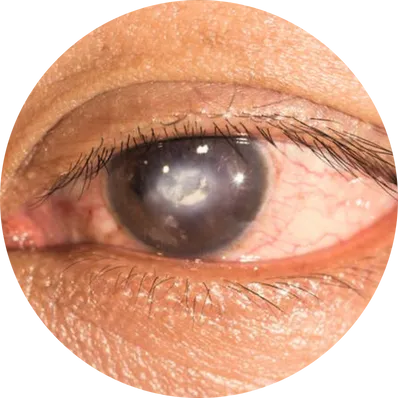
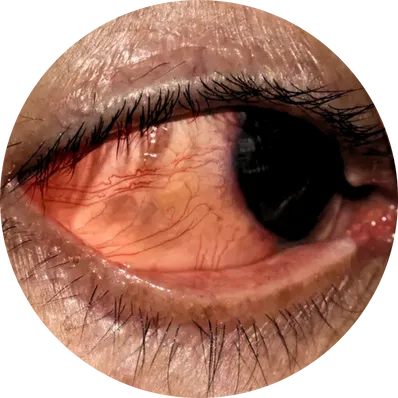
.webp)


Varicose Veins Causes

.svg)


.svg)
Types of Varicosities
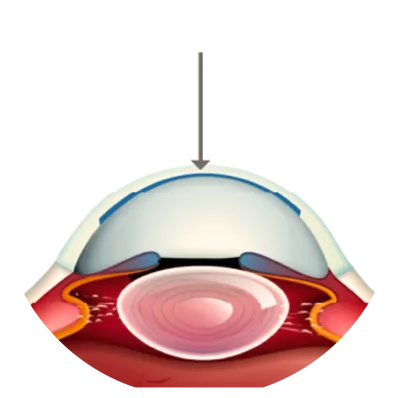
.webp)
Diagnosis (Before Surgery)




Full-Thickness Penetrating Keratoplasty (PKP) Treatment
This is the most commonly performed PKP technique.
• A circular portion of the patient’s cornea is removed
• A matching donor cornea is placed
• 16–24 fine sutures are used to secure the graftThis method restores transparency, improves vision, and is suitable for most cornealdiseases.
Used when:
• Keratoconus is advanced
• Corneal scarring is severe
• Vision cannot be corrected with lenses or cross-linkingPKP provides excellent optical outcomes in keratoconus patients.
Indicated after:
• Infections
• Injuries• Chemical burns
• Post-surgical scarringThe full-thickness graft restores clarity and improves quality of life.
Although partial corneal transplants (DMEK/DSAEK) are preferred, PKP is recommendedwhen:
• The entire cornea is damaged
• Multiple layers are affected
• There is significant stromal scarring
When corneal swelling is irreversible and severely affects vision, PKP helps by replacing thedamaged cornea entirely.
In selected cases, PKP may be performed with:
• Cataract surgery
• Glaucoma surgeryThis is done to avoid multiple surgeries and speed up visual rehabilitation
After PKP, doctors advise:
• Long-term use of steroid eye drops
• Regular follow-ups for graft monitoring
• Avoid rubbing the eye or heavy lifting
Why You Should Not Delay
Delaying PKP can lead to worsening vision, persistent pain, or even permanent vision loss. Early surgery ensures better visual outcomes and reduces complications like corneal thinning or perforation.

Why Us?
With Healic you get Trustworthy Care, Affordable Prices and Parivaar Jaisi Dekhbhal.
6 Hospitals; 4 Under Construction
Patients Served Last Year
Expert Doctors & Surgeons
Expert Care Team

Real Patient Stories
Frequently Asked Questions
PKP is a full-thickness corneal transplant where the damaged cornea is replaced with a healthy donor cornea. Yes, Healic provides advanced PKP performed by experienced corneal specialists.
Healic may recommend PKP for severe blurred vision, corneal scarring, keratoconus, corneal dystrophies, swelling, trauma, or when other treatments cannot restore vision.
Under anesthesia, the surgeon removes a circular section of the damaged cornea and replaces it with a donor cornea using fine stitches. The procedure usually takes 1–2 hours.
Vision improves gradually over weeks to months. Stitches may stay for 6–12 months. Full healing can take up to a year. Healic provides long-term follow-up, eye drops, and monitoring for graft health.
Risks include graft rejection, infection, astigmatism, or increased eye pressure. With skilled ophthalmic surgeons and strict post-op care, Healic ensures high graft survival and clear vision recovery.
Don’t worry, our expert team will guide you through diagnosis, treatment options, and recovery. Share your question and we’ll respond quickly.
Get Expert Advice
.svg)
.svg)
.svg)
.svg)