.svg)
Safe & Reliable Forearm Fracture Surgery
Advanced plating techniques to stabilize broken forearm bones, restore alignment, and help you regain strength and mobility.


.svg)


What is Forearm Plating Surgery?
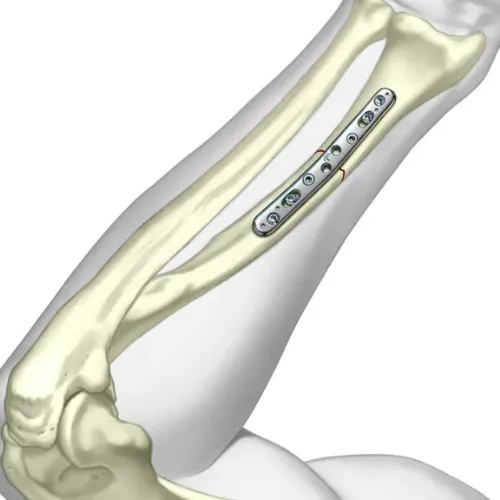
Forearm plating surgery is an orthopedic procedure used to treat fractures of the radius, ulna, or both bones in the forearm. Metal plates and screws are surgically fixed to the bone to provide stability, ensure proper alignment, and allow the bone to heal correctly. This procedure is commonly performed in displaced, unstable, or complex fractures where casting alone is insufficient.
Symptoms


.jpg.webp)

.jpeg.webp)
Causes (Leading to Surgery Need)
.svg)



Types of Forearm Plating
Diagnosis (Before Surgery)




Forearm Plating Treatment (Surgical Approach)
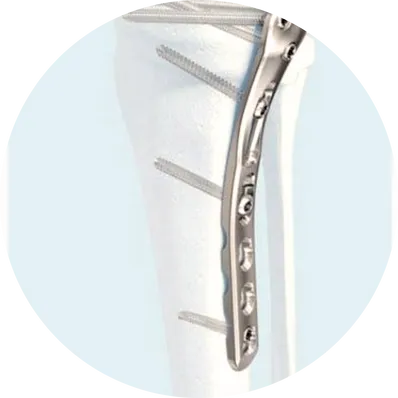
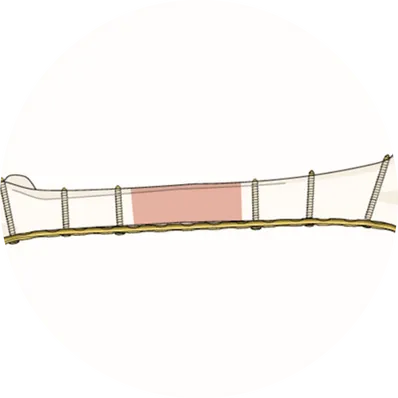
The surgeon makes a small incision over the fractured bone, gently exposes the fracture site, and realigns the bone fragments into their correct anatomical position. Stainless steel or titanium plates are then fixed using screws to stabilize the bone securely.
Special care is taken to maintain the natural rotational movements (pronation and supination) of the forearm. Proper alignment ensures the patient regains functional mobility essential for daily activities.
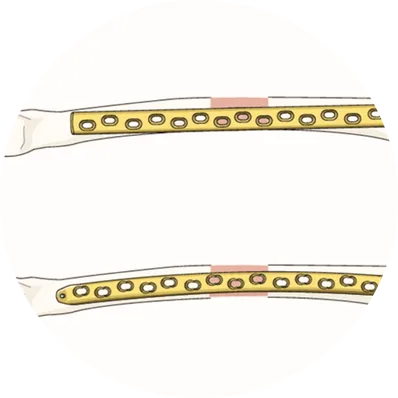
In cases of both-bone forearm fractures, each bone is individually plated using separateincisions. This ensures better stability, quicker healing, and prevents long-term deformity or arm weakness.
Real-time imaging is used during surgery to confirm perfect alignment of the bones andaccurate placement of plates and screws, ensuring optimal healing.
After fixation, the incision is sutured and the arm is supported with a splint or cast temporarily to reduce pain and swelling. Early finger and wrist movements are encouraged to prevent stiffness.
Physical therapy begins gradually to improve strength, rotation, and flexibility. Full recovery typically occurs within 8–12 weeks, depending on the severity of the fracture and patient healing.
Why You Should Not Delay
Delaying surgery can result in poor bone alignment, loss of forearm function, stiffness, or permanent disability. Early plating ensures proper healing, restored mobility, and long-term arm strength.

Why Us?
With Healic you get Trustworthy Care, Affordable Prices and Parivaar Jaisi Dekhbhal.
6 Hospitals; 4 Under Construction
Patients Served Last Year
Expert Doctors & Surgeons
Expert Care Team

Real Patient Stories
Frequently Asked Questions
Forearm plating is a procedure where metal plates and screws are used to fix fractures of the radius or ulna. Yes, Healic offers advanced plating surgery for complex and unstable forearm fractures.
Healic specialists suggest plating when you have severe pain, visible deformity, inability to rotate the arm, open fractures, or fractures that cannot heal properly with casting alone.
Under anesthesia, the fracture is realigned, and a metal plate is fixed to the bone with screws for stability. Healic uses compression or locking plates depending on fracture type for best healing.
Hospital stay is usually 2–4 days. Physiotherapy begins early to restore movement. Bone healing takes 8–12 weeks, and full recovery may take 3–6 months with Healic’s rehab support.
Possible risks include infection, implant irritation, stiffness, or delayed bone healing. At Healic, skilled orthopedic surgeons and guided physiotherapy help ensure proper alignment and strong recovery.
Don’t worry, our expert team will guide you through diagnosis, treatment options, and recovery. Share your question and we’ll respond quickly.
Get Expert Advice
.svg)
.svg)
.svg)
.svg)