.svg)
Freedom from Joint Pain with Replacement Surgery
Advanced hip, knee, and shoulder replacement procedures to relieve pain, restore mobility, and help you return to an active lifestyle.



.svg)


What is Joint Replacement?
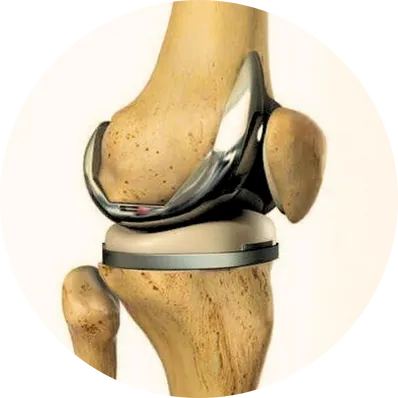
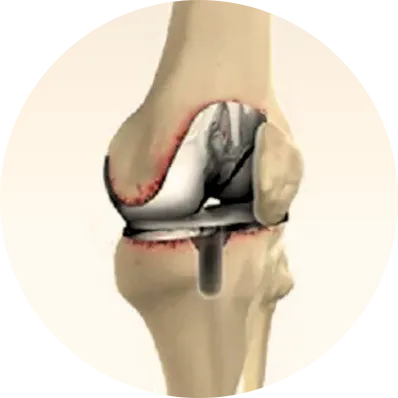
Joint replacement surgery (also called arthroplasty) is a procedure where a damaged joint is removed and replaced with an artificial implant (prosthesis). It is most commonly performed for hip and knee joints, but can also be done for shoulders, elbows, and ankles. The aim is to relieve pain, restore mobility, and improve quality of life in patients with severe joint disease.

Symptoms
.jpg.webp)
.jpg.webp)



Causes (Leading to Joint Damage)




Types of Joint Replacement

Diagnosis (Before Surgery)




Joint Replacement Treatment (Surgical Approach)
• The damaged joint surfaces are removed and replaced with artificial implants.
• Common joints replaced include the knee, hip, and shoulder.
• Provides long-term pain relief and restores mobility when arthritis is advanced.
• Only the damaged portion of the joint is replaced while preserving healthy bone and tissue.
• Often used in early-stage arthritis of the knee or hip.
• Allows faster recovery and more natural movement.
• Performed through smaller incisions with less muscle disruption.
• Reduces pain, bleeding, and recovery time.
• Suitable for select patients depending on bone structure and joint damage
• Performed when the existing joint implant becomes loose, infected, or worn out.
• The old implant is removed and replaced with a new one.
• Helps restore stability and function in failed joint replacements.
• Advanced robotic or computer navigation is used for precise alignment of implants.
• Ensures better accuracy, improved joint function, and longer implant lifespan.
• Ideal for complex deformities or advanced arthritis.
• Essential for strengthening muscles and restoring proper movement.
• Includes guided physiotherapy, gait training, and home exercises.
• Helps the patient return to daily activities, improving overall quality of life.
Why You Should Not Delay
Delaying surgery can worsen pain, reduce mobility, cause permanent joint damage, and significantly affect quality of life. Early intervention ensures faster recovery and better outcomes.

Why Us?
With Healic you get Trustworthy Care, Affordable Prices and Parivaar Jaisi Dekhbhal.
6 Hospitals; 4 Under Construction
Patients Served Last Year
Expert Doctors & Surgeons
Expert Care Team

Real Patient Stories
Frequently Asked Questions
Joint replacement (arthroplasty) is a procedure where damaged joint surfaces are replaced with artificial implants to reduce pain and restore movement. Yes, Healic offers hip, knee, shoulder, and other joint replacement surgeries.
If you have severe joint pain, stiffness, swelling, or difficulty performing daily activities despite medications or physiotherapy, Healic specialists may recommend joint replacement.
Under anesthesia, the damaged joint surfaces are removed and replaced with metal, ceramic, or plastic implants. Healic surgeons use advanced minimally invasive and precision-guided techniques for better outcomes.
Most patients stay 3–5 days in the hospital. Physiotherapy begins within 24–48 hours. Daily activities resume in 4–6 weeks, with full recovery taking 3–6 months under Healic’s rehabilitation program.
Risks include infection, blood clots, implant wear, or stiffness. With expert orthopedic surgeons, strict infection control, and guided physiotherapy, Healic ensures safe and long-lasting results.
Don’t worry, our expert team will guide you through diagnosis, treatment options, and recovery. Share your question and we’ll respond quickly.
Get Expert Advice
.svg)
.svg)
.svg)
.svg)