.svg)
PCNL Surgery for Large Kidney Stones
Safe and minimally invasive procedure to remove complex kidney stones, relieve pain, and protect kidney function.


.svg)



What is PCNL?
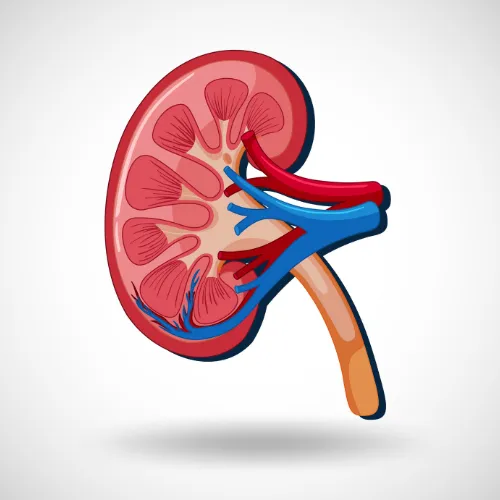
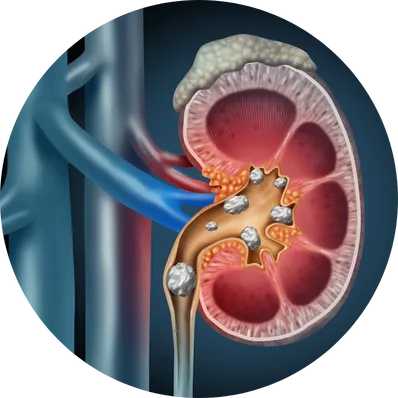
PCNL is a minimally invasive surgical procedure to remove large or complex kidney stones (usually >2 cm) that cannot be passed naturally or treated with other methods like ESWL (shock wave lithotripsy) or ureteroscopy. A small incision is made in the back to
directly access the kidney, and stones are broken and removed using a nephroscope.
Symptoms


%20(1).webp)

Causes of Kidney Stones
(Leading to PCNL Need)



Types of PCNL

Diagnosis (Before Surgery)




.webp)
Treatment
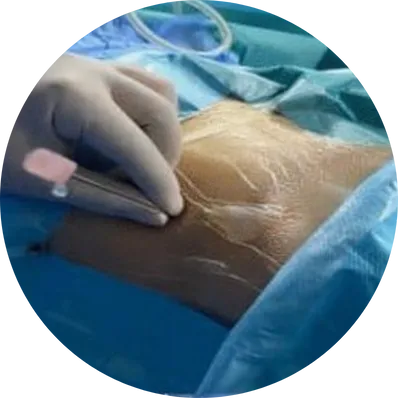
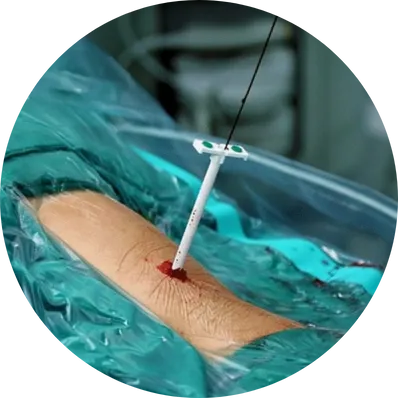
Used for large kidney stones (usually > 2 cm), staghorn stones, or stones resistant to other treatments. A small incision (about 1 cm) is made in the back, and a nephroscope is inserted to directly visualize and remove the stone. Fragments are extracted using forceps or broken with laser/ultrasound energy.
A smaller tract size is used (smaller instruments), reducing bleeding and improving recovery time. Ideal for medium-sized stones or patients needing a minimally invasive approach. Causes less postoperative pain and offers faster healing.
These use even smaller instruments, suitable for smaller stones. Minimizes tissue trauma and is ideal for children or patients with low pain tolerance.
If the stone is hard or complex, a Holmium or Thulium laser is used to break it into tiny fragments. Allows complete clearance of stones with difficult shapes or locations.
Used when laser is not preferred. Ultrasound energy breaks the stone and allows simultaneous suction removal. Effective for softer or mixed-composition stones.
A flexible scope is used during the procedure to access hidden calyces. Ensures complete stone clearance and prevents recurrence.
Performed when bleeding is minimal and all stones are removed. No nephrostomy tube is left behind, reducing pain and speeding recovery. Allows earlier discharge (often within 24 hours).
Used when there is bleeding, infection risk, or residual fragments. Helps drain urine and promotes kidney healing in the first few days.
A ureteral stent may be inserted to ensure smooth urine flow after the procedure. Reduces swelling and prevents blockage during healing.
Why You Should Not Delay
Delaying treatment for large kidney stones can lead to repeated infections, kidney damage, or permanent loss of function. Early PCNL ensures safe stone removal, pain relief, and kidney protection.

Why Us?
With Healic you get Trustworthy Care, Affordable Prices and Parivaar Jaisi Dekhbhal.
6 Hospitals; 4 Under Construction
Patients Served Last Year
Expert Doctors & Surgeons
Expert Care Team

Real Patient Stories
Frequently Asked Questions
PCNL is a minimally invasive surgery to remove large or complex kidney stones through a small incision in the back. Yes, Healic provides advanced PCNL procedures performed by expert urologists.
PCNL is advised for large stones (>2 cm), staghorn stones, stones causing repeated infections, severe pain, obstruction, or reduced kidney function. Healic confirms the need after detailed imaging.
Under general anesthesia, Healic surgeons create a small tract to the kidney, break the stones with laser or ultrasonic devices, and remove the fragments using a nephroscope.
Most patients stay 2–4 days in the hospital. Drains or catheters are removed in a few days, and full recovery usually occurs within 1–2 weeks with Healic’s post-surgery care.
Possible risks include bleeding, infection, or residual stones. At Healic, skilled urologists, precise imaging, and strict monitoring help ensure effective and safe kidney stone removal.
Don’t worry, our expert team will guide you through diagnosis, treatment options, and recovery. Share your question and we’ll respond quickly.
Get Expert Advice
.svg)
.svg)
.svg)
.svg)